


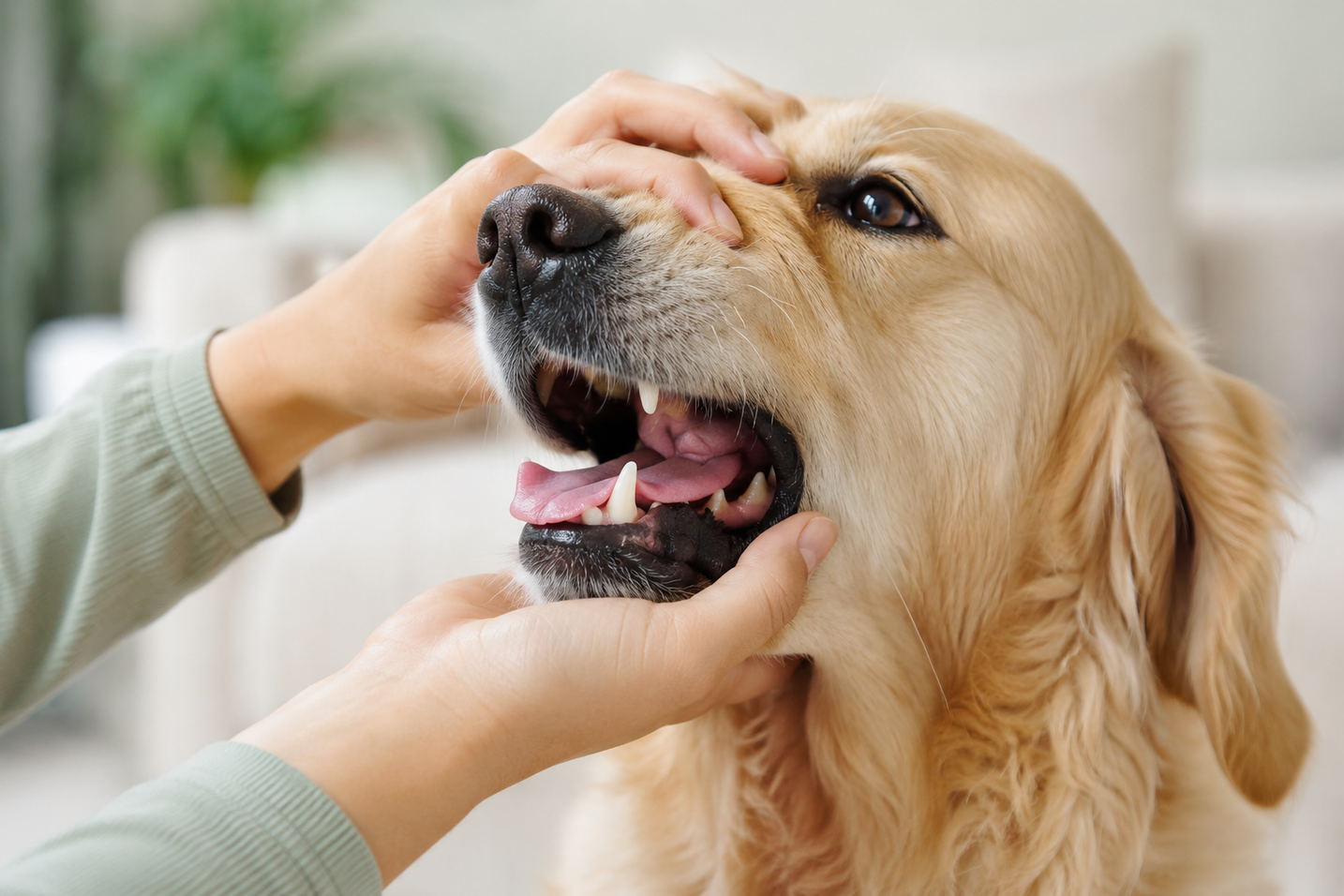
Why Does My Dog's Breath Smell So Bad? A Vet-Backed Guide to Canine Halitosis
If leaning in for a cuddle with your dog makes you recoil, you're not alone — and that funky "dog breath" isn't just something you have to live with. While a slightly meaty odour after dinner is normal, breath that clears the room is your dog's body waving a red flag. In the vast majority of cases, that flag points to one thing: dental disease.
This guide breaks down exactly why your dog's breath smells so bad, what the science says is really happening inside their mouth, and the evidence-based steps you can take to fix it.
The Short Answer: It's Usually Their Teeth
Let's cut to the chase. The number one cause of bad breath (medically called halitosis) in dogs is periodontal disease — infection and inflammation of the gums and structures supporting the teeth.
This isn't a rare problem. By the age of three, roughly 80% of dogs already show signs of periodontal disease, and it is widely recognised as the most common clinical condition in adult dogs. The reason it flies under the radar is simple: it's also one of the most frequently ignored pet health issues, because the early signs are easy to dismiss until the smell becomes impossible to.
So when you ask "why does my dog's breath smell so bad?", the honest answer for most dogs is: bacteria are quietly building up along the gumline, and the odour is a by-product of that process.
The Science: Where the Smell Actually Comes From
Here's what's happening on a chemical level, and it's genuinely fascinating.
Your dog's mouth has its own microbiome — a normal community of bacteria living on the teeth, gums, and tongue. When plaque (a sticky bacterial biofilm) accumulates, certain bacteria begin breaking down proteins from food and saliva. This process releases volatile sulfur compounds (VSCs) — the same class of chemicals responsible for the rotten-egg smell of hydrogen sulfide and the pungent odour of methyl mercaptan.
These VSCs are the actual source of the stench. A landmark study published in The Journal of Nutrition confirmed three key things: measuring VSC levels is a reliable way to quantify halitosis in dogs, there is a clear positive link between halitosis and periodontal disease, and treating the periodontal disease dramatically reduced the bad breath.
Even more importantly, these sulfur compounds aren't just smelly — they're damaging. Research shows VSCs, particularly hydrogen sulfide, have direct toxic effects on the soft tissues of the mouth, weakening the tissue barrier and helping the disease progress. In other words, bad breath isn't just an unpleasant symptom; it's part of the mechanism that drives the disease deeper.
The Plaque-to-Tartar Timeline
Understanding how fast this develops explains why bad breath creeps up so quickly:
- Within 20 minutes of a professional cleaning, plaque can begin reforming on the teeth.
- Within about 72 hours, if that plaque isn't disrupted by brushing or chewing, minerals in the saliva harden it into calculus (tartar) — a cement-like deposit firmly bonded to the tooth.
- Once tartar forms, brushing can no longer remove it. Only professional veterinary scaling can.
Tartar tends to build up fastest on the large cheek teeth of the upper jaw, right where the salivary ducts release mineral-rich saliva. As it accumulates, it traps more bacteria, inflames the gums (gingivitis), and the smell intensifies. This is the cycle daily home care is designed to interrupt.
When Bad Breath Means Something Beyond Teeth
While dental disease accounts for most cases, halitosis can occasionally signal a problem elsewhere in the body. It's worth knowing these, because they change the urgency of a vet visit:
- Oral tumours or foreign bodies. A slow-growing growth or a stick fragment lodged in the mouth can cause tissue breakdown and a distinctly foul odour.
- Kidney disease. Dogs with failing kidneys sometimes develop breath with an ammonia-like or urine-like smell, caused by waste products the kidneys can no longer clear.
- Diabetes mellitus. Poorly controlled diabetes can produce a sweet or acetone-like breath. Notably, this odour often comes and goes — appearing when blood sugar is poorly managed and resolving when it's back under control.
- Liver disease. Can contribute to persistent, unusual-smelling breath alongside other symptoms.
- Lip-fold infections. In breeds with heavy facial folds (and "bearded" breeds like Schnauzers), food and saliva get trapped in the skin folds or facial hair, letting bacteria thrive right next to the mouth.
A useful rule of thumb: breath that smells off for a day or two, with no other symptoms, is rarely cause for alarm. But breath that stays foul for more than a couple of weeks — what vets call chronic halitosis — warrants investigation. And breath paired with vomiting, excessive drinking, weight loss, or a change in appetite deserves a prompt vet visit.
Which Dogs Are Most at Risk?
Some dogs are simply built for dental trouble:
- Small and toy breeds. Their teeth are crowded closer together in a small jaw, giving plaque more sheltered spots to accumulate. Smaller dogs also tend to live longer and are more often fed soft food, both of which raise the risk.
- Flat-faced (brachycephalic) breeds. Anatomy pushes teeth into crooked, overlapping positions that are hard to keep clean.
- Any dog with crowded or misaligned teeth (malocclusions). Overlapping teeth create plaque traps.
- Older dogs. Since periodontal disease is progressive, the longer it goes unmanaged, the worse it — and the breath — becomes.
How to Fix (and Prevent) Bad Dog Breath
The good news: because periodontal disease is largely preventable, fresh breath is an achievable goal. Here's what the evidence supports, ranked roughly by impact.
1. Brush their teeth — the gold standard
Daily toothbrushing with a pet-safe toothpaste (never human toothpaste — it can contain xylitol and fluoride that are toxic to dogs) is the single most effective home strategy. It physically disrupts plaque before it can mineralise into tartar. The catch? Surveys suggest only around 16% of dog owners brush their dog's teeth daily, despite it being the veterinary gold standard. Even a few times a week is far better than nothing, and most dogs can be trained to tolerate it with patience and rewards.
2. Consider oral supplements and additives with evidence behind them
Some ingredients have genuine clinical backing. Certain seaweed-derived supplements have been shown in trials to reduce plaque, tartar, VSC levels, and gingival bleeding. A 2025 randomised, double-blind, placebo-controlled trial of a novel canine oral health probiotic found it reduced volatile sulfur compounds by 27% compared to placebo, with measurable improvement in as little as 7 days — and, tellingly, owners' perception of their dog's breath improved too.
Probiotics are also gaining attention for supporting a healthy oral microbiome and slowing the disruption that drives periodontal disease. As with chews, look for products with published data rather than marketing claims alone.
3. Book a professional dental check-up and cleaning
If your dog already has established tartar, home care alone won't undo it. A veterinary COHAT (Comprehensive Oral Health Assessment and Treatment) — performed under anaesthesia — allows your vet to scale away tartar below the gumline, take dental X-rays, and treat or extract diseased teeth. It's the reset button that makes home care effective again. As the studies show, treating the underlying periodontal disease is what truly eliminates the odour, rather than masking it.
The Bottom Line
That bad breath isn't just an aesthetic nuisance — it's the most reliable early warning sign of periodontal disease, a condition affecting the majority of adult dogs. The smell itself comes from volatile sulfur compounds produced by plaque bacteria, and those same compounds actively damage your dog's mouth over time.
The fix is refreshingly straightforward: brush daily, choose VOHC-accepted dental products, use evidence-backed supplements where helpful, and don't skip professional cleanings. Do that, and you'll not only get pleasanter cuddles — you'll be protecting your dog from pain, tooth loss, and the broader health consequences of chronic oral infection.
If your dog's bad breath has appeared suddenly, smells unusually of ammonia or acetone, or comes with other symptoms like vomiting or increased thirst, book a vet visit sooner rather than later. Sometimes bad breath is just bad breath — but sometimes it's your dog telling you something important.
This article is for educational purposes and isn't a substitute for professional veterinary advice. Always consult your veterinarian about your individual dog's health.